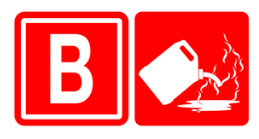
43 labels of classification located on fire extinguisher
The ABCs, Ds, and Ks of Fire Extinguishers - Occupational Health & Safety Extinguishers that are suitable for Class A fires should be identified by a triangle containing the letter "A." A Class B fire extinguisher is used for flammable liquid and gas fires such as oil,... What Are The 5 Classes of Fire Extinguishers? - SelectSafety.net There are different types of fires that extinguishers are designed to fight. These include: Class A - a fire started with normal combustibles such as wood, paper, and cloth. Class B - a fire started with flammable and combustible liquids and gases such as gasoline and paints.
DOT Update on Fire Extinguisher Classification With this being the case, pre-engineered and engineered system cylinders would be required to be marked, labeled, and entered on the shipping papers as Fire Extinguisher, UN1044, Hazard Class 2. NOTE: this does not include any carbon dioxide cylinder, extinguisher, or cartridge.

Labels of classification located on fire extinguisher
Types and Classification of Fire Extinguisher A foam extinguisher is the most common fire extinguisher for Class B fires. Find a good Fire Extinguisher manufacturer who could give you a good quality fire extinguisher. And safety can be guaranteed. Label Colour: Cream; Use For: Organic materials example: paper, cardboard, wood also Flammable liquids example: paint and petrol Do not use for: A Guide to Pipe Marking Standards | Creative Safety Supply For that reason, ANSI lays out the following requirements for pipe marking labels: Pipe labels must be placed above or below the horizontal centerline of the pipe to maximize visibility. This must be done to pipes that are above or below worker’s normal line of vision. Pipe labels must be placed near valves and flanges. What are the 5 Types of Fire Extinguishers? - Vanguard These types of fires require an extinguishing agent that will not react with the burning metal. Most Class D fire extinguishers use a dry powder agent to smother the fire and absorb heat, suppressing the fire. 05. Class K Fire Extinguishers. Class K fire extinguishers are made to combat kitchen fires. Used on cooking fat, grease, and oil fires ...
Labels of classification located on fire extinguisher. PDF KNOW YOUR FIRE EXTINGUISHER - Town of Prosper Most fire extinguishers will have a pictograph label telling you which classifications of fire the extinguisher is designed to fight. For example, a simple water extinguisher might have a label like the one below, ... are located in your area. Read the labels and know their locations! You don't want to mistakenly use a "BC" extinguisher on a eCFR :: 46 CFR Part 142 -- Fire Protection (d) A 40-B portable fire extinguisher must be located near the storage room or cabinet. This is in addition to the portable fire extinguishers required by tables 142.230(a) and 142.230(b) of this part. What Do the Numbers Mean On a Fire Extinguisher? The letter on a fire extinguisher indicates its classification: Class A puts out ordinary combustible fires (wood, paper, plastic, etc.) Class B puts out flammable liquid fires (oil, gas, petroleum, etc.) Class C puts out electrical fires Class D puts out combustible metal fires (magnesium, titanium, potassium, sodium, etc.) Law Document English View | Ontario.ca Inspection of fire dampers and fire-stop flaps. 2.2.3.7. Fire dampers and fire-stop flaps shall be inspected annually, or on an approved time schedule. 2.2.3.8. Door openings and the surrounding areas shall be kept clear of everything that would be likely to obstruct or interfere with the free operation of the door.
How to Read a Fire Extinguisher Tag - Telgian On the tag, you will find each fire extinguisher is either Class A, Class B, Class C, Class D, Class K or a combination of classes. These classifications refer to the type of fires your extinguisher can put out . Class A: These extinguishers are suitable for common combustibles, including wood, paper, rubber, cloth and several types of plastics. Fire extinguisher colour codes: what do they mean? Class A Fires - involving normal combustible materials like wood, paper, cloth, plastic or rubber products Class B Fires - involving combustible liquids like petrol, oil paint and solvents Not suitable for: Class C Fires - involving combustible gases like LPG, Natural gas and acetylene The 5 Types And Colours Of Fire Extinguishers And Their Uses Dry powder fire extinguishers are red with a blue label. Like foam, the non-combustible powder smothers the fire. Unlike foam extinguishers, this type of extinguisher doesn't contain water so can be used on live electrical equipment. Powder extinguishers can be used on class B (liquid), class C (gases), and class E (or electrical fires). What Are the OSHA Requirements for Sink-Mounted Eyewash ... Sep 10, 2018 · The station should be located on the same level as the hazard, have a clear path for travel, be installed in a well-lit area, and be marked with a visible safety sign. Sink-mounted eyewash stations, also called plumbed eyewash stations, like the one your client would like to install, are permanently connected to a continual source of potable water.
Fire Extinguisher Classification Labels (ABC etc) Additionally, a fire extinguisher sticker helps customers remember who to call when extinguishers needs service or when they have a question about your equipment. Many fire extinguisher service companies have their information printed right on the fire extinguisher classification label. Identifying Fire Extinguishers By Colour - CheckFire Water extinguishers take a red label. This type of fire extinguisher is most commonly used for Class A fires (those caused by flammable solids like wood or paper). Cream Foam extinguishers display a cream label. They're most commonly used on Class B fires (started by flammable liquids). Find Out What the Symbols on Your Fire Extinguisher Actually Mean Classes The letters you see above, in green, red, blue, yellow and black, indicate which class of fire any particular fire extinguisher is equipped to fight. Fire can have several different fuel sources and they all need to be extinguished differently. Fire Extinguisher Location and Placement - Nfpa put out. While these requirements apply to all portable fire Extinguisher Requirements Table Extinguisher Class and Letter-Shaped Symbol Markings Extinguisher Use Location Requirements A Required anywhere ordinary combustibles are present. Fires involve materials such as wood, cloth, and paper. Requirements for fire extinguisher size and spacing
How to Choose the Right Fire Extinguisher
PDF KNOW YOUR FIRE EXTINGUISHER - prospertx.gov Most fire extinguishers will have a pictograph label telling you which classifications offire the extinguisher is designed to fight.For example, a simple water extinguisher might have a label like the one below, indicating that it should only be used on Class A fires.

- 466204K KIDDE/EXTG 10# ABC W/HOOK | MMIMarine.com
Your Guide to Fire Extinguisher Types - EMC Insurance According to OSHA, air pressurized water, carbon dioxide (CO2) and dry chemical are the three most common types of fire extinguishers, with wet chemical extinguishers also used often. For general use, Mike Duffield, EMC Risk Improvement Manager, sees multi-purpose fire extinguishers used most often. These extinguishers contain a chemical, such ...
How to Choose the Right Fire Extinguisher
5. What do the numbers and letters mean on a fire extinguisher? The typical home fire extinguisher available at the home center is marked with a series of numbers and letters to indicate what type and how large of a fire the extinguisher can be used on. ... Klein Volunteer Fire Dept is located in North Harris County. Station 1 was created in 1951 and in sixty eight years the department has expanded to eight ...
Post a Comment for "43 labels of classification located on fire extinguisher"