42 how to read japanese nutrition labels
Quick Guide: Know And Understand Food Allergies In Japan ... Unfortunately, as with most food labels in Japan, this information is typically only available in Japanese. But worry not: Here is the information you need, supported with examples of different food labels so that non-Japanese speakers can safely shop — and enjoy — every bit of Japan's cuisine! The Ultimate Guide to Reading Food Labels in Japan ... Most labels similar to this type will then list total protein (たん白質), fat ( 脂質), carbohydrates (炭水化物), and sodium (ナトリウム), and some will list sugar, but many count sugar under the "carbohydrate" category and don't always split them so you can see how much of the carbs are sugars. It varies though.
Understanding of sodium content labeled on food packages ... In Japan, food labeling regarding nutritional content is regulated by the Health Promotion Act, which defines the nutrients that should be printed on food labels and how this should be performed ...

How to read japanese nutrition labels
How To Read Sake Label • Steamy Kitchen Recipes Giveaways How to Read Japanese Sake Labels This is the front of two Japanese sake bottles. I love how the names of Japanese sake is just so beautiful…they've translated the Japanese name of these two sake to: "Divine Droplets" and "Heaven's Door"! chowhound.comChowhound Thank you for making Chowhound a vibrant and passionate community of food trailblazers for 25 years. We wish you all the best on your future culinary endeavors. Reading food labels | Tasmanian Department of Health Check the date 'Use-by' - food should not be eaten after this date as it may not be safe. 'Best-before' - food can be eaten after this date but the quality may not be as good. The Nutrition Information Panel (NIP) Most packaged foods will have a NIP. Use the panel to compare similar packaged foods and drinks.
How to read japanese nutrition labels. Japanese Decoded: Nutrition Labels - Savvy Tokyo On the top left, we see the nutritional information (栄養成分表, eiyou seibun you), which contains all the basic nutrition facts about the product, such as grams of carbohydrates, protein, and fat. On the middle left, above the bar code, we see a list of common allergens, with those contained in these particular rice crackers highlighted in black. Understanding Food Labels - Consumer Health News | HealthDay The "See it, Do it, Teach it" program has three sections. First, people are taught how to read nutrition labels on packaged food items using a government guide. Next, participants do simple math based on the food labels to learn how the nutrition label information relates to their own daily intake of calories and nutrients. › regulatory-information › search-fdaGuidance for Industry: Food Labeling Guide | FDA Questions concerning the labeling of food products may be directed to the Food Labeling and Standards Staff (HFS-820), Office of Nutrition, Labeling, and Dietary Supplements, Center for Food ... Expiry dates - The Japan Times "Date labeling is confusing for Japanese consumers, too," one assured me. ... It means "limit for consumption" and is equivalent to the "use by" wording on food labels in English ...
How to Read a Food Label: A Healthy Skeptic's Guide to the ... Food & Drink; How to Read a Food Label: A Healthy Skeptic's Guide to the Buzzwords From 'organic' to 'regenerative,' certain terms can have a halo effect so bright it's blinding. Understanding Food Nutrition Labels | American Heart ... Learn what to look for on the label. 1 - Start with the serving information at the top. This will tell you the size of a single serving and the total number of servings per container (package). 2 - Next, check total calories per serving and container. HOW TO: Find Allergy-Friendly Food in Japan | Surviving in ... Check out the ultimate guide to reading Japanese food labels for everything you need to know. Kirsten Adachi is a Canadian who has lived in Japan for nine years. She writes the recipe bog Cooking in Japan and is a contributor to Being a Broad. Twitter: @kirsty_girl Pinterest: cookinginjapan. Reading Japanese Food Labels - Allergens and Tips Food labels are 食品表示 (しょくひんひょうじ shokuhin hyou ji) in Japanese. Let's take a look at a food label before going on into the various parts of Japanese food labels and how to read them. Below is the label to a popular brand of barley (mugi) tea. Lots of text here, but if you look closely the label actually consists of 2 parts.
Tokyo Guide: How To Read Japanese Food Labels | Tokyo ... Calories (エネルギー) One of the first things that people look for on a label is the calorie content of that food. Japan uses the same system as the rest of the world, kcals, which is often represented as Calories, with a capital C, in the US. Weight loss and gain at the most basic level is a matter of calories into and calories out of the body. › expert-advice › nutritionBest Dog Food: How to Know What's Right for Your Dog Sep 28, 2021 · Dog food labels are required by the Food and Drug Administration (FDA) to tell you eight key pieces of information, and individual states may also have their own labeling requirements: Product ... Food Labeling & Nutrition | FDA Food labeling is required for most prepared foods, such as breads, cereals, canned and frozen foods, snacks, desserts, drinks, etc. Nutrition labeling for raw produce (fruits and vegetables) and ... › expert-advice › nutritionMy Dog Won't Eat Kibble. Now What? - American Kennel Club May 17, 2021 · Give Fresh Dog Food a Go. There’s a newer, increasingly popular addition to the array of dog food options: fresh dog food. For example, Ollie offers human-grade food, made with natural ...
Business courses online in Australia | Finder
Pick the right fish for your dish - How to read seafood ... But unfortunately, the food labels are not in English. Seafood labels are especially difficult to understand and select for your particular dish. You often see the lables of "生食用" (for raw food), "刺身用" (for sashimi), "加熱用" (for heating), "焼き魚用" (for grill) on seafood packaging in Japanese supermarkets.

Does Reading Nutrition Labels Improve Health? - The Health Sciences Academy
Japanese Supermarket Guide: Must-Know Phrases, Food Label ... In Japan, it's pretty easy to find regular cow milk (牛乳), soy milk (豆乳), and almond milk (アーモンドミルク). Cow milk in Japan comes in a wide variety, from those fortified with iron (鉄) or calcium (カルシウム), to low-fat products (低脂肪). To check exactly how much fat your milk has, look out for the fat content label (乳脂肪分).

Japanese Food Labels, and How to Read Them 2 | This is some … | Flickr
Food Allergies in Japan: How to Enjoy Traveling Safely ... The food labeling system in Japan has different requirements and only 7 core allergens are required to be labelled. A list of allergenic foods in Japan is: eggs, milk, wheat, buckwheat, peanuts, shrimp and crab. Some allergens can be listed using very different forms, such as 落花生 and ピーナッツ - both of which refer to peanuts.

Reading Japanese Food Labels - Allergens and Tips
How to Read Japanese Food Label | Coto Language Academy Guide to Your Japanese Food Labels Guide to your Japanese Bathtubs Vocabulary: エネルギー (enerugi-) Energy たんぱく質 (tanpakushitsu) Protein 脂質 (shishitsu) Fat 炭水化物 (tansuikabutsu) Carbohydrate 糖質 (toushitsu) Sugar 食物繊維 (shokubutsuseni) Fiber 食塩 (shokuen) Sodium 低カロリー (teikarori-) Low Calorie 高たんぱく質 (koutanpakushitsu) High Protein 無糖 (mutou) No Sugar

Deciphering Japanese Nutrition Labels | Nutrition labels, Labels, Nutrition
How to read a label | NSW Food Authority How to read a label. Nearly every food product requires a label with specific information that tells us what's in it, how to handle it, and where it has come from, to help us make healthy and safe food choices. See Labels & the law for a list of everything that should be included on a food label.
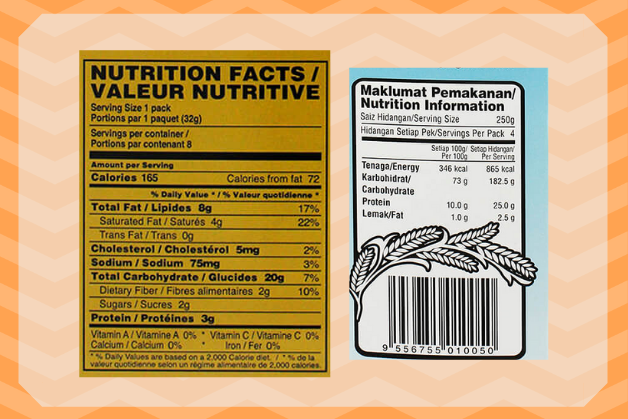
11 Rules for Food Packaging and Labeling in Malaysia
How to Read Nutritional Labels in Chinese - Blogger The nutrition labels usually offer the following facts, and typically in this order: 熱量 (Re4 Liang4) Energy ( units = 大卡 / da1 ka3 / Kcal) 蛋白質 (Dan4 Bai2 Zhi4) Protein (unit = 公克 / gong1ke4 / gram) 脂肪 (Zhi1 Fang2) Total Fat (unit = 公克 / gong1ke4 / gram) 飽和脂肪 (Bao3 He2 Zhi1 Fang2) Saturated Fat (unit = 公克 / gong1ke4 / gram)
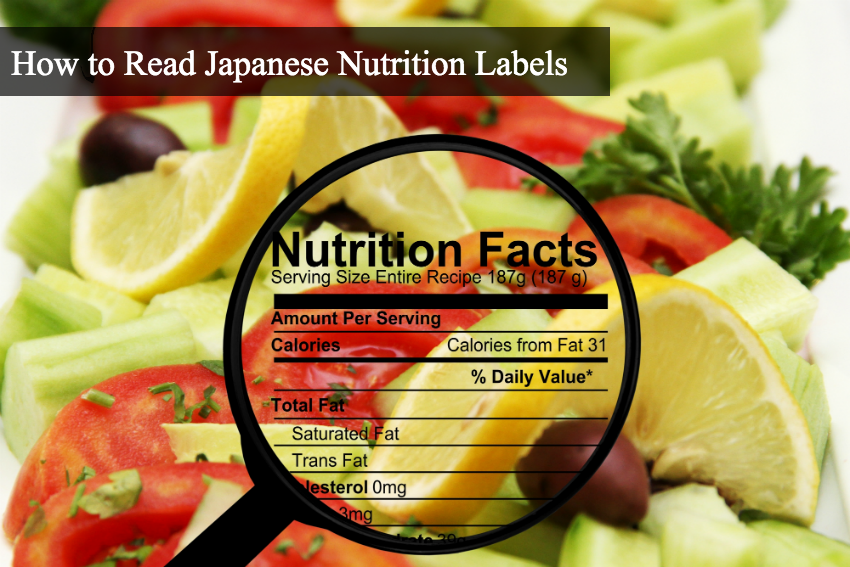
How to Read Japanese Nutrition Labels - PLAZA HOMES
en.wikipedia.org › wiki › UmeboshiUmeboshi - Wikipedia The standard Japanese folk remedy for colds and flus is okayu (rice congee) with umeboshi. Another usage of umeboshi is in "Ume chazuke", a dish of rice with poured in green tea topped with umeboshi. Umeboshi were esteemed by the samurai to combat battle fatigue, a function of their salt and citric acid content, among other factors.

Pin by Sarah Nishina on japan | Outdoor, Outdoor decor, Sidewalk
Reading Japanese Food Labels | JustBento Reading Japanese Food Labels. Submitted by anon. on Sat, 2009-09-05 07:24. I live in Japan and have trouble reading and understanding everything on food labels. Do you know if partially hydrogenated oils are used in Japanese foods, such as packaged cookies? Do you know what the word for it or "trans fat" is in Japanese or how to write it?
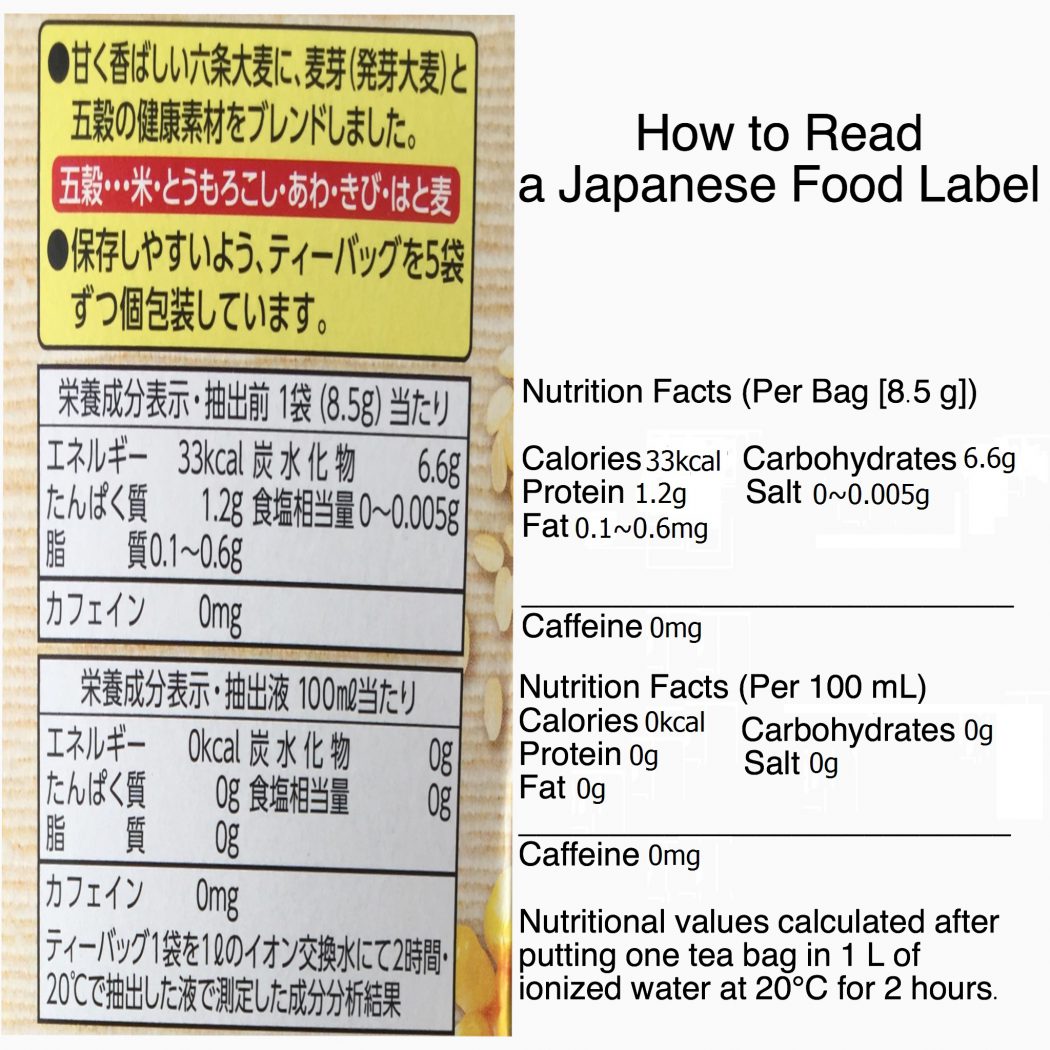
Reading Japanese Food Labels - Allergens and Tips
How to Read a Dog Food Label - American Kennel Club The quantity listed on the label tells you how much of the food is in the container. This may be measured by weight, liquid measure, or by count. Products can vary in density (think wet food vs....
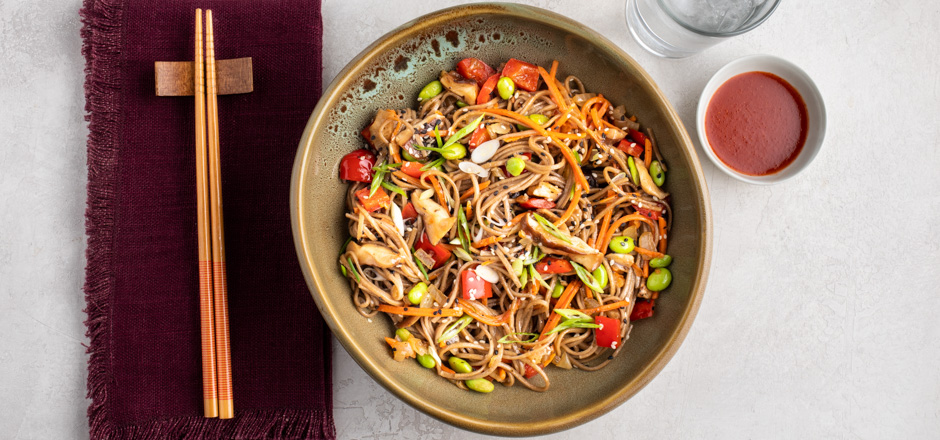
35 Soba Noodles Nutrition Label - Labels Database 2020
› nutrition › salt-good-or-badSalt: Is It Healthy or Unhealthy? Nov 04, 2021 · Make sure to always check the labels and nutrition panels of packaged foods. They provide helpful product information, including the sodium content per serving.

34 Trader Joe's Jasmine Rice Nutrition Label - Labels Design Ideas 2020
How to Read Japanese Nutrition Labels - JapanLivingGuide ... To this end, you should check the amount of carbs and sugar contained in your food and beverages. On a nutrition label, "carbohydrate" means the sum of "sugar" and "dietary fiber". Sugars Sugars (糖質, toshitsu) are contained in cereals, potatoes, rice, sugar, etc. They are nutrients which are our energy sources.

33 Ramen Noodles Nutrition Label - Labels Design Ideas 2020
How To Read a Japanese Nutrition Label - YouTube This was something I wanted to know, too, so I just uploaded a video so it'll help some people along the way. Ever wanted to know what some of the basic nut...

How to Read Nutritional Labels in Chinese
Food Allergies in Japan: How to Read Japanese Food Labels ... Luckily, the Ministry of Agriculture, Forestry, and Fishery (MAFF) in Japan has made a legal requirement that all manufacturers must indicate the following seven foods if they are included as ingredients: 1. Buckwheat 2. Crab 3. Egg 4. Milk 5. Peanut 6. Shrimp 7. Wheat Food Allergens 20 Items which are not always listed

The Health-Nut Corner: Nutrition Label World Tour: Japan
Japanese Health and Nutrition information Eat enough grains such as rice and other cereals. ・ Eat grains every day to maintain adequate energy intake from carbohydrate. ・ Utilize grains such as rice and other cereals, suited to Japan's climate and soil conditions. Combine vegetables, fruits, milk products, beans and fish in your diet.
Convenience Stores, Grocery Stores and Supermarkets in Japan
Be Sure to Read Labels for Portion, Calorie Control ... Start by looking at the number of servings in the package and the calories in each of those servings. Realize that if the calorie count is low because the serving size is very small, one portion may not satisfy you. Next, look at the nutrients. Fat grams deliver twice the calories of protein and carbs, so keep them in check.
Post a Comment for "42 how to read japanese nutrition labels"